

3 Ways Leaders Improve Safety In The Real World.
Getting clear on what you need to protect, is step one.
Psychological safety is the absence of interpersonal fear.
Countless studies have discovered psychological safety is the ‘secret sauce’ for high performing teams. When workplaces have high rates of psychological safety, innovation, collaboration and teamwork skyrockets.
As a leader, you can improve safety in multiple ways.
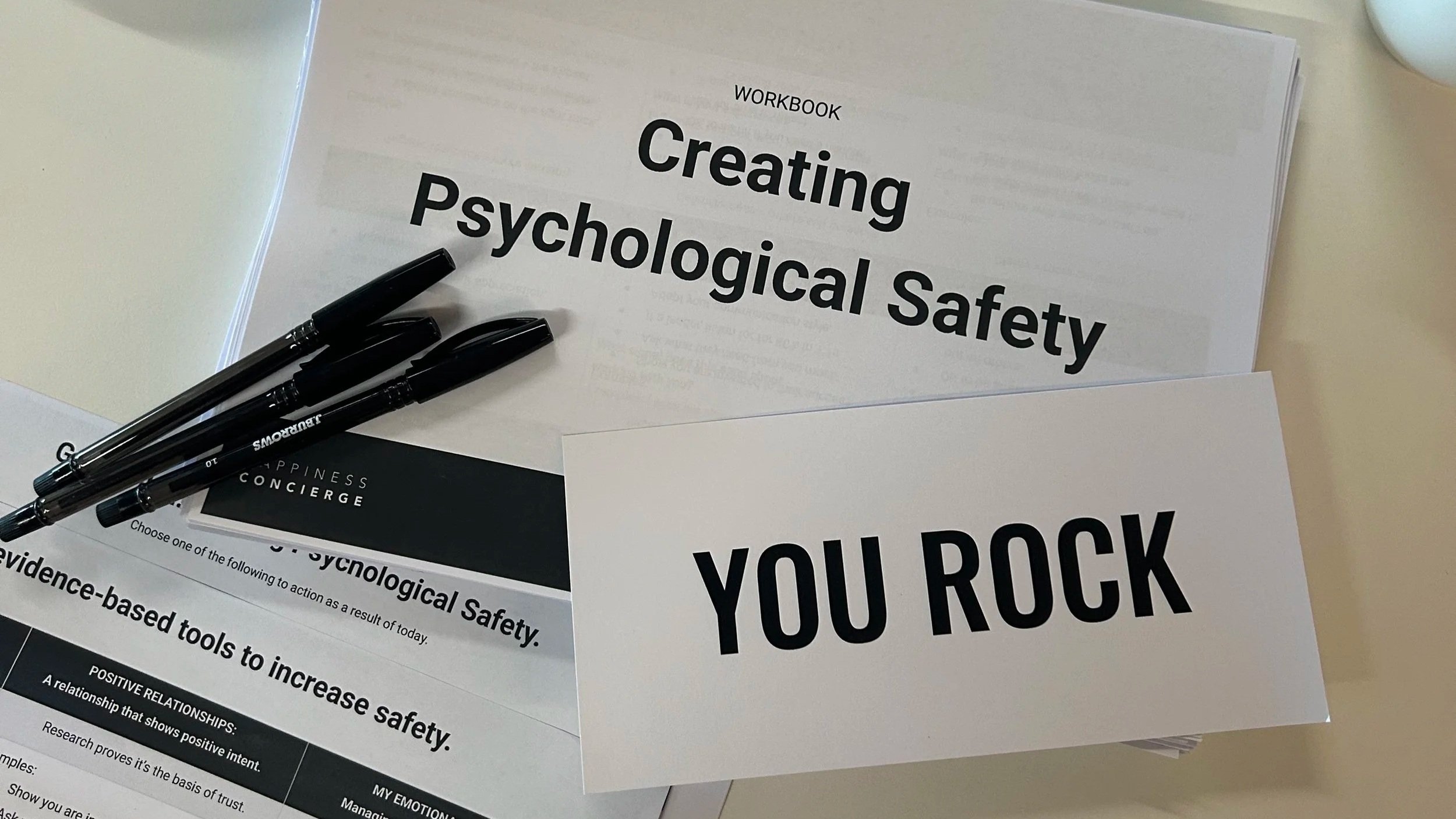
In our workshops, we teach strategies to improve safety at work.
Here are three that have resonated with leaders over the years:
Grow your tolerance for witnessing someone else's discomfort.
Re-think your 1:1s: permission to make them more ‘useful’.
Hide yourself from others when you need to protect relationships.
Strategy one: Growing tolerance for someone else's discomfort.
Many leaders avoid feedback out of not wanting to hurt the relationship. The irony is that an absence of feedback keeps a relationship fragile.
A psychologically safe relationship is one that can handle feedback. Yet telling someone that something they’ve done hasn’t hit the mark can be terrifying for some leaders, because they don’t like to hurt other people's feelings.
For example, 44% of leaders say they find feedback stressful and 21% avoid feedback entirely. Having worked with hundreds of leaders in private coaching, I’ve learned it’s not really the feedback that’s the ‘ick’. It’s having to witness someone else uncomfortable and not being allowed to save the day.
Watching someone else struggle is counter intuitive for folks who like to make people's lives easier. Yet it’s impossible to grow without learning. Learning is inherently … awkward.
It’s a lesson in not taking on the burden of someone else's (in)competence.
Seeing yourself as separate from someone, while being co-responsible for the results they produce, is the opportunity to build safer relationships.
Why? When you go into ‘fix it’ mode, the other person stays incompetent and disempowered. When you allow mistakes to happen, within reason, they get to fix it themselves, learning the skill and lessening the burden to you long term.
Building the muscle of not fixing.
Putting yourself in lower stakes scenarios, where you’re forced to witness someone else's discomfort without fixing or saving the day, can help develop that muscle.
For example, sending back an incorrect order at a cafe, asking for a refund when you get overcharged, correcting someone who just waffled on about nonsense. Give the problem back to them. Allow yourself to witness incompetence or their defensiveness for a short bit. Allow it to exist without you fixing.
Sometimes… to enjoy comfort long term, you gotta do a slightly uncomfortable thing in the short term to set the standard.
Strategy two: Re-think your 1:1’s.
Teams with positive 1:1 relationships with their peers and leaders are more likely to define themselves as ‘safer’ to perform in. When employees get quality 1:1 time with their manager independently of the team, psychological safety improves by 12%.
Research shows us it’s not the length of time we spend together with others that dictates the strength of a relationship, but rather how meaningful it is.
At work, that means getting specific on what you want to get out of your 1:1 and how that could benefit both you and your team members.
In my leadership workshops, when we ask leaders to list the top thing they need to know from their direct report (e.g. KPI’s, progress, stakeholder happiness levels), they can do so with ease.
When we ask them if they currently get that as an update in their 1:1s, almost half say they don't get what they need. The 1:1 has become a habit, rather than being mutually useful.
Tactics to consider in your next 1:1:
Be explicit about what you need before the 1:1, to help them prepare.
One study found nearly 50% of employees have no idea what’s expected of them. Increase safety by being more upfront with what good looks like, what failure looks like, what finished looks like. Use those expectations to frame feedback when expectations aren’t met.
Ask them what they need in a 1:1.
Some just want to get stuff done. Others want advice on how to approach a tricky situation. Ask them. As one leader said recently after training: “I asked each of my team members what they wanted out of their 1:1’s. The results were illuminating.”
Focus on finding, and helping them solve roadblocks.
Research proves that if you only focus on removing roadblocks for your team members, safety in your relationship would increase 12%. Going into ‘fixer’ mode doesn’t help someone grow. But highlighting a recurring challenge does.
Strategy 3: Hide yourself from others when you’re at max capacity.
Being able to predict how someone else is going to behave is one thing that makes us feel safe in relationships. To paint a picture, one study discovered that people would rather have a boss be consistently average, than inconsistent in their mood. Why? People regulate around what they anticipate.
As a leader, it’s your job to find ways to not hide your stress, but hide yourself from others, when you are too strung out to be constructive or kind.
You can’t outthink your way out of a build up of ongoing stress. You have to create releases that work for you that close out your stress management system.
In our workshops, we’ve noticed that what gets leaders to actually make this happen, is to reflect how often they’re in the yellow (stretched-zone) and red zone (out of control), and what they need to do to get themselves out of that.
Leaders often admit they’ve been so busy in the ‘doing’, they don’t realise how tired or overwhelmed they feel.
Take a minute to think about the person you’re becoming in your current environment. Do you want to keep being this person?
Recap: three ways leaders have shared they improved safety in their teams.
Practicing witnessing someone else's discomfort without ‘fixing’.
Reverse engineering their 1:1’s to be mutually useful.
Noticing spicy moments that require extra reserves to protect others from their overflow of tiredness/overwhelm.
Do your leaders need these skills now?
No need to wait. Get your leaders trained in psychological safety today.

Creating Psychological Safety Programme.
For leaders and individual contributors.